
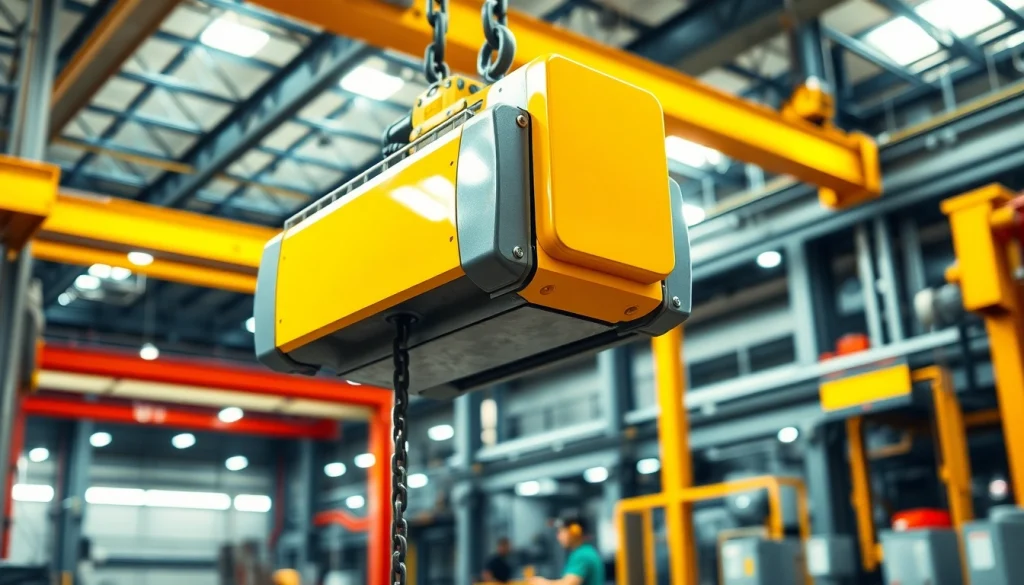
Understanding Electric Chain Hoist Cranes
Electric chain hoist cranes represent a pivotal advancement in lifting technologies, combining efficiency and safety in various industrial applications. Unlike traditional lifting methods, electric chain hoists utilize electric power to raise and lower heavy loads, significantly reducing manual labor and time. When exploring options, electric chain hoist crane solutions offer reliable performance tailored to demanding operational environments.
What is an Electric Chain Hoist Crane?
An electric chain hoist crane is a mechanical device that employs an electric motor to lift and lower loads using a chain. Typically mounted on a track or beam, these cranes are designed for heavy-duty applications, providing precise control over lifting operations. By pairing the lifting chain with a sturdy electric motor, these cranes are capable of handling weights ranging from a few hundred pounds to several tons, making them indispensable in sectors like manufacturing, construction, and warehousing.
Key Features and Specifications
- Load Capacity: Available in various capacities, typically ranging from 1/8 ton to over 50 tons, suitable for different lifting needs.
- Lifting Speed: Designed for high-speed performance, with some models allowing for variable speeds to accommodate specific tasks.
- Power Source: Operate on either single-phase or three-phase power, making them versatile for various industrial settings.
- Safety Features: Equipped with features such as overload protection, emergency stop switches, and limit switches to ensure safe operation.
- Durability: Constructed from robust materials to withstand harsh working conditions and provide long-lasting performance.
Benefits of Using Electric Chain Hoist Cranes
The adoption of electric chain hoist cranes in industrial environments comes with numerous benefits:
- Increased Efficiency: Electric hoists can lift heavier loads faster than manual hoists, thereby reducing downtime and increasing productivity.
- Reduced Labor Costs: Automation of lifting tasks minimizes the need for manual labor, leading to significant cost savings in labor expenses.
- Enhanced Safety: The incorporation of advanced safety features reduces the risk of workplace accidents, promoting a safer working environment.
- Precise Control: Electric hoists offer finer control over load movements compared to manual alternatives, allowing for delicate handling of materials.
Comparing Electric Chain Hoist Cranes to Other Lifting Equipment
Understanding the differences between electric chain hoist cranes and other lifting equipment is crucial for making informed purchasing decisions. Below are comparisons based on functionality and use.
Electric Chain Hoists vs. Manual Chain Hoists
Manual chain hoists, also known as chain blocks, require physical effort to lift loads, making them suitable for low-frequency use and smaller load applications. In contrast, electric chain hoists are powered by electric motors, offering a more efficient lifting solution ideal for frequent and heavy-duty operations. Here’s a quick comparison:
- Efficiency: Electric chain hoists provide faster and easier lifting compared to manual types.
- Labor Intensity: Manual hoists require significant physical effort, while electric versions automate heavy lifting.
- Application: Electric hoists excel in high-frequency applications, whereas manual hoists work best in infrequent settings.
Choosing Between Electric and Pneumatic Options
Pneumatic hoists utilize compressed air for operation, offering a unique alternative to electric hoists. The choice between electric and pneumatic options often depends on the specific environment and requirements:
- Pneumatic Hoists: Ideal for environments with stringent explosive atmosphere regulations, as they do not generate sparks.
- Electric Hoists: Suitable for general-purpose lifting where electrical safety standards are met, providing more power and speed.
Common Applications and Use Cases
Electric chain hoists are versatile tools used across various industries, including:
- Manufacturing: For moving heavy equipment and materials along assembly lines.
- Construction: In lifting building materials and structural components.
- Warehousing: For efficient loading and unloading of goods.
- Entertainment: In stage and set design for lifting and positioning lighting and props.
Installation and Safety Considerations
Proper installation and adherence to safety protocols are critical when deploying electric chain hoist cranes in any setting. Addressing these considerations can ensure operational efficiency and safety.
Best Practices for Installing Electric Chain Hoist Cranes
Follow these best practices to ensure correct installation:
- Choose an appropriate mounting location that can support the hoist’s weight and capacity.
- Ensure all electrical connections comply with local regulations and standards.
- Test the hoist under a controlled environment before regular use to verify functionality.
Safety Features to Look For
When selecting electric chain hoists, prioritize safety features that enhance operational safety, such as:
- Overload protection systems to prevent lifting beyond the rated capacity.
- Emergency stop buttons that allow immediate cessation of operation.
- Limit switches that stop the chain at predetermined heights to prevent accidents.
Common Mistakes to Avoid
Avoiding these common mistakes can prevent costly accidents and equipment failure:
- Neglecting routine inspections, which can lead to undetected issues.
- Overloading the hoist beyond its rated capacity.
- Improper training of operators, which can cause misuse and accidents.
Maintenance and Performance Optimization
Routine maintenance is essential for maximizing the performance and lifespan of electric chain hoist cranes. Below are recommendations for effective upkeep.
Routine Maintenance Tips for Longevity
- Regularly inspect the lifting chain for wear and tear, replacing it as necessary.
- Lubricate moving parts to reduce friction and enhance functionality.
- Check electrical connections periodically to prevent energy loss and potential hazards.
Signs Your Electric Chain Hoist Crane Needs Repair
Be attentive to the following signs, indicating that your hoist may require repair:
- Unusual noises during operation, such as grinding or squeaking.
- Inconsistent lifting performance or failure to lift loads.
- Visible damage to cables or structural components.
Optimizing Performance for Heavy Lifting
To ensure optimal performance during heavy lifting operations, consider the following strategies:
- Utilize the appropriate hoist for the load type and weight.
- Maintain a balanced load distribution to prevent tipping and uneven stress on the hoist.
- Ensure operators are trained in the proper use of hoisting equipment to maximize efficiency and safety.
Future Trends in Electric Chain Hoist Technology
As industries evolve, so do technologies associated with lifting equipment. Electric chain hoists are experiencing transformations driven by innovation.
Emerging Innovations for 2025 and Beyond
Several innovations are set to enhance the functionality and efficiency of electric chain hoists, such as:
- Advanced Materials: The development of lighter and stronger materials will improve the durability and performance of hoists.
- Energy Efficiency: Emerging electric hoists will be designed to consume less power while maintaining high performance.
- Integrated Monitoring Systems: Smart technology integration for real-time monitoring of hoist performance and usage.
The Rise of Smart Hoisting Solutions
Smart technology is becoming increasingly prevalent in hoisting equipment, allowing for:
- Remote operation and monitoring capabilities.
- Integration with other automated systems for seamless workflow management.
- Data analytics to predict maintenance needs and enhance operational planning.
Impact of Industry 4.0 on Hoisting Equipment
The advent of Industry 4.0 is reshaping how hoisting equipment operates, leading to:
- Increased automation in lifting processes, enhancing productivity.
- Greater connectivity between hoists and other machinery for improved system efficiency.
- Real-time data collection for optimized operations and maintenance scheduling.