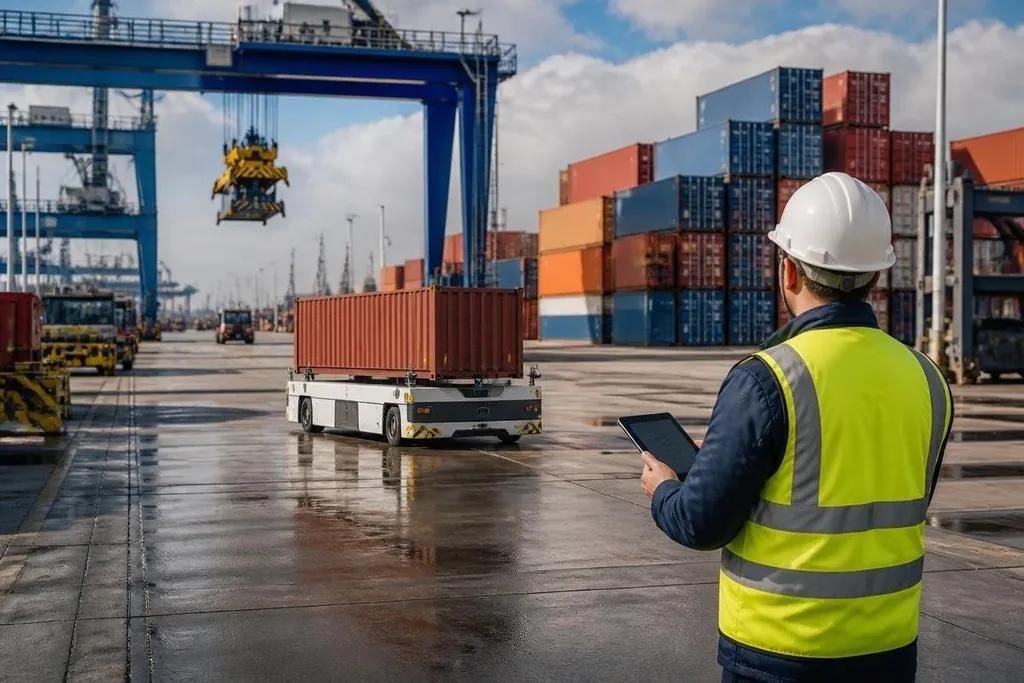
Port robots will earn money when they cut a delay, reduce a dangerous task, or keep cargo moving with fewer people at risk. The opening for suppliers is clear: sell a measured result at one part of the port, then prove it can work through a full shift.
Quick read
- Yard vehicles can target repeat trips between fixed points.
- Inspection robots can collect images without sending people into risky areas.
- The buyer will care about minutes saved, not the robot’s shape.
Start with the job, not the robot
Ports have repeat work that suits automation. Vehicles move containers between the quay, storage blocks, rail links, and loading areas. Cranes lift boxes. Cameras and sensors check equipment, cargo, and access routes.
That does not mean every task suits an autonomous system. A robot needs a stable route, clear rules, and a safe response when a truck, person, or container appears in its path. The best early sale will target work with a narrow range of outcomes.
A supplier might charge for the robot, the control software, site setup, and support. The operator might instead pay per completed trip, inspected asset, or hour of machine use. Each model changes who carries the cost when the system stops.
That question belongs in the first contract. A low purchase price means little if the port still needs a large team to watch every movement.
Where the money could come from
Yard transport is one possible market. A robot vehicle could run between two known points, use cameras and LiDAR to map nearby objects, and stop when its sensors detect a blocked route. The business case would rest on repeat trips and fewer idle minutes.
Inspection is another path. A mobile robot could carry cameras around cranes, conveyors, storage areas, or ship access points. Its value would come from finding damage early and creating a record that maintenance teams can check later.
That claim needs proof from a real inspection job, not a smooth video.
Safety work may support a different sale. A robot could enter an area after a spill, fire alarm, or structural concern while people wait outside. The system would need reliable remote control, clear video, and a safe way to stop. The site would also need rules for recovery when the robot loses power or contact.
A paid port service needs proof from the quay, not a clean demo. Reports at Robot 24 can put the robot, task, site, and result beside the sales claim before you price the offer.
The hard part is the port itself
Ports are busy outdoor sites. Rain can cover lenses. Salt can damage exposed parts. Night work changes what cameras can see. Radio links can weaken around steel structures and moving equipment.
A robot that works on a marked test route may still fail when a container blocks its normal path. Software must handle the exception, and people must know who takes control. Those details affect cost more than a polished autonomy claim.
Integration can add another bill. The robot may need access to traffic rules, crane schedules, container records, gates, and emergency systems. The buyer should ask which systems the supplier can connect to now, and which work still needs manual entry.
I’d back a small paid trial with a clear stop rule over a large fleet order based on a demo.
What a buyer should measure
The first trial should use one defined task and one measured route. It should record normal runs, blocked routes, sensor faults, remote takeovers, charging time, and work lost during maintenance.
Robot suppliers also need to state what the trial does not prove. A robot that completes one route in daylight has not shown that it can work in rain, darkness, traffic, or a second terminal.
The commercial result should fit on a page. List the hours the robot worked, the number of completed jobs, the number of human interventions, and the cost of keeping the system ready.
A practical buying checklist
Before signing a port robotics trial, ask for:
- One task: name the exact movement or inspection job.
- One route: mark the area, entry points, and safe stop zones.
- Failure rules: state who takes control after a fault.
- Service terms: record response times, spare parts, and repair duties.
- Trial data: require logs for work time, stops, interventions, and missed jobs.
- Exit test: set the result that earns a second site or ends the trial.
That last point protects the buyer from paying for a permanent experiment. Port robots can become useful businesses, but the first sale needs a number attached to it: trips completed, inspections finished, or hours returned to the operation.