
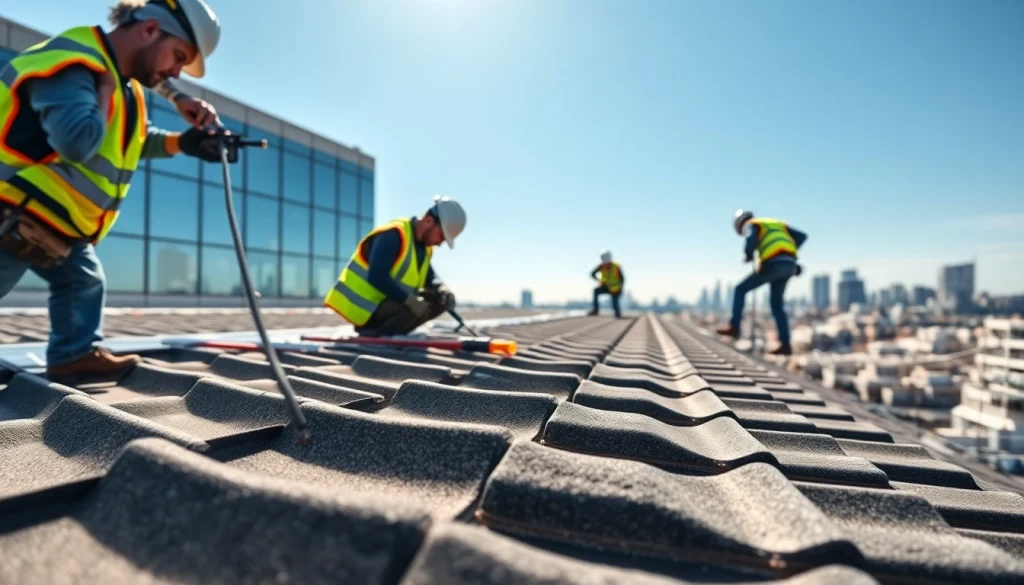
Understanding Commercial Roofing Services
What Are Commercial Roofing Services?
Commercial roofing services encompass a wide range of roofing solutions tailored specifically for commercial and industrial properties. Unlike residential roofing, which can be more straightforward and typically involves smaller areas, commercial roofing deals with larger structures that have unique requirements. These services include installation, repair, maintenance, and replacement of roofs designed to withstand various environmental factors and usage demands. Well-executed commercial roofing services ensure that your roof remains durable, functional, and aesthetically pleasing while providing adequate protection to the building and its contents.
Common Types of Commercial Roofs
Commercial roofs come in several varieties, each suited for different applications and building types. Understanding these types is crucial when selecting the right roofing system for your business needs:
- Flat Roofs: Often seen in retail stores and warehouses, flat roofs are easier to install and maintain. They are typically built using materials like TPO (Thermoplastic Polyolefin), EPDM (Ethylene Propylene Diene Monomer), PVC (Polyvinyl Chloride), or built-up roofing (BUR) systems.
- Low-Slope Roofs: These roofs are designed with a pitch that is less than 3:12, making them ideal for commercial buildings where drainage is not a significant issue. They are usually surfaced with single-ply membranes or asphalt.
- Metal Roofs: Durable and long-lasting, metal roofs (such as standing seam, corrugated, or R-panel) are popular in commercial settings due to their longevity and energy efficiency. They can also be customized to enhance aesthetics.
- Modified Bitumen: This roofing solution combines asphalt with modifiers for increased flexibility and UV resistance. Modified bitumen is typically used on low-slope roofs and can be installed using various techniques, including torch-down or peel-and-stick.
- Green Roofs: These eco-friendly roofs incorporate vegetation and provide insulation and reduced energy costs. They require a waterproof layer along with a sustainable soil system to support plant growth.
The Importance of Quality Materials
The quality of materials used in roofing significantly affects the lifespan and performance of a roofing system. High-quality materials resist environmental damage, reduce maintenance costs, and improve energy efficiency. When engaging in commercial roofing services, it is vital to consult with roofing professionals about the best materials for your specific roofing needs. High-performance materials often provide warranties that can extend the lifespan of the roof, ultimately resulting in lower overall costs.
Key Benefits of Choosing Professional Commercial Roofing Services
Improved Durability and Longevity
Investing in professional commercial roofing services ensures that your roofing system is built with durability in mind. Experienced contractors understand the complexities of commercial roofing and can utilize high-quality materials combined with top-notch installation techniques. This results in roofs that can withstand harsh weather conditions, UV exposure, and other environmental stressors, significantly extending the roof’s lifespan. Properly installed commercial roofs can last anywhere from 20 to 50 years, depending on the materials and maintenance.
Cost-Effectiveness Over Time
Although the upfront cost of installing a commercial roof can be significant, professional roofing services prove to be cost-effective in the long run. When roofs are well-designed and installed, the likelihood of requiring major repairs decreases, resulting in lower maintenance costs over time. Additionally, improved energy efficiency due to high-quality insulation and reflective materials can translate to reduced utility bills, leading to substantial savings.
Enhanced Energy Efficiency
Modern commercial roofing materials come in various energy-efficient options that can help reduce cooling and heating costs. Reflective membranes, for instance, can significantly lower roof temperatures, minimizing the heat absorbed by the building. By utilizing energy-efficient roofing solutions, businesses can not only save on operational costs but also contribute positively to sustainability and environmental initiatives.
Choosing the Right Contractor for Commercial Roofing Services
Essential Qualities to Look For
When selecting a commercial roofing contractor, it is crucial to look for the following essential qualities:
- Experience: Look for contractors with a well-established history in commercial roofing. An experienced contractor is likely to have dealt with various roofing types and challenges.
- Licensing and Insurance: Ensure that the contractor is licensed and carries adequate insurance. This protects you from liability in case of accidents or damage during construction.
- Reputation: Research the contractor’s reputation through online reviews, testimonials, and referrals. A good reputation often indicates reliability and quality of work.
- Workmanship Warranty: A reputable contractor should offer a warranty for their workmanship, covering potential issues caused by improper installation.
- Transparency: Choose a contractor who is upfront about costs, timelines, and the materials being used. Transparency is a sign of trustworthiness.
Questions to Ask Before Hiring
Before finalizing a contractor for your commercial roofing project, asking the following questions can help clarify their qualifications and processes:
- How long have you been in the commercial roofing business?
- Can you provide references of previous projects that are similar in scope?
- What types of roofing materials do you recommend and why?
- What does your warranty cover, and how long does it last?
- How do you handle unexpected issues or additional costs that arise during the project?
Importance of Customer Reviews and References
Customer reviews and references are vital for discerning the quality of a contractor’s work. They provide insights into the contractor’s capabilities, reliability, and customer service. It is important to read through multiple reviews and, if possible, contact previous clients to gain first-hand experiences. Solid reviews can serve as a testament to the contractor’s workmanship and help you make an informed decision.
Maintenance Tips for Commercial Roofs
Regular Inspections and Assessments
Regular inspections and assessments are crucial for maintaining the integrity of your commercial roof. Creating a schedule for roof inspections, ideally twice a year, ensures that any potential issues are identified early and addressed before they escalate into more significant problems. During inspections, look for signs of wear and tear, such as cracks, blisters, or significant debris accumulation.
Common Maintenance Practices
Implementing standard maintenance practices can go a long way in extending the life of your commercial roof. These practices include:
- Cleaning gutters and downspouts to ensure proper water drainage.
- Removing debris, such as leaves and branches, to prevent moisture accumulation.
- Repairing minor leaks or damages promptly to prevent further deterioration.
- Monitoring and maintaining flashings and seams, as these areas are susceptible to leaks.
- Applying protective coatings, where applicable, to enhance durability and reflectivity.
Signs Your Roof Needs Professional Attention
Being aware of signs indicating that your roof needs professional help is essential for preventing substantial damage. Keep an eye out for:
- Visible water stains on ceilings or walls inside the building.
- Increased energy bills indicating potential air leaks.
- Holes or punctures in the roofing material.
- Excessive granules in gutters, indicating that the roofing material is deteriorating.
- Bubbling or blistering on the roof surface.
Understanding Costs Associated with Commercial Roofing Services
Factors Influencing Pricing
Several factors can influence the pricing of commercial roofing services. Understanding these factors can help you budget more effectively for your roofing project:
- Roof Size: Larger roofs require more materials and labor, influencing the overall cost.
- Roof Type: Different roofing materials and systems come with varying price points. Choices like metal roofing generally cost more than traditional asphalt, but may provide longer-term savings.
- Labor Costs: Labor rates can vary based on your location and the expertise of the contractor.
- Project Complexity: Roofs with unique shapes, multiple levels, or additional features will typically incur higher costs due to the increased labor and materials needed.
- Seasonal Demand: Prices may fluctuate based on the demand for roofing services during certain seasons.
How to Budget for Roofing Projects
Creating a robust budget for your commercial roofing project involves several steps:
- Conduct a comprehensive assessment of the current roof’s condition to understand the scope of work needed.
- Research potential contractors and obtain multiple quotes to understand average costs in your area.
- Factor in additional costs for unforeseen repairs that may arise during the project.
- Consider setting aside a contingency fund of approximately 10-20% of the total budget for unexpected expenses.
- Investigate financing options if significant upfront costs pose a challenge.
The Value of Investing in Quality Roofing
Investing in high-quality commercial roofing services pays dividends in durability, aesthetics, and energy efficiency. While it may appear more expensive upfront, the long-term benefits often justify the costs. Quality roofing contributes to increased property values, lower energy bills, and fewer repairs over time. Furthermore, a well-maintained roof enhances the overall image of your business, positively impacting client perceptions and employee satisfaction.